





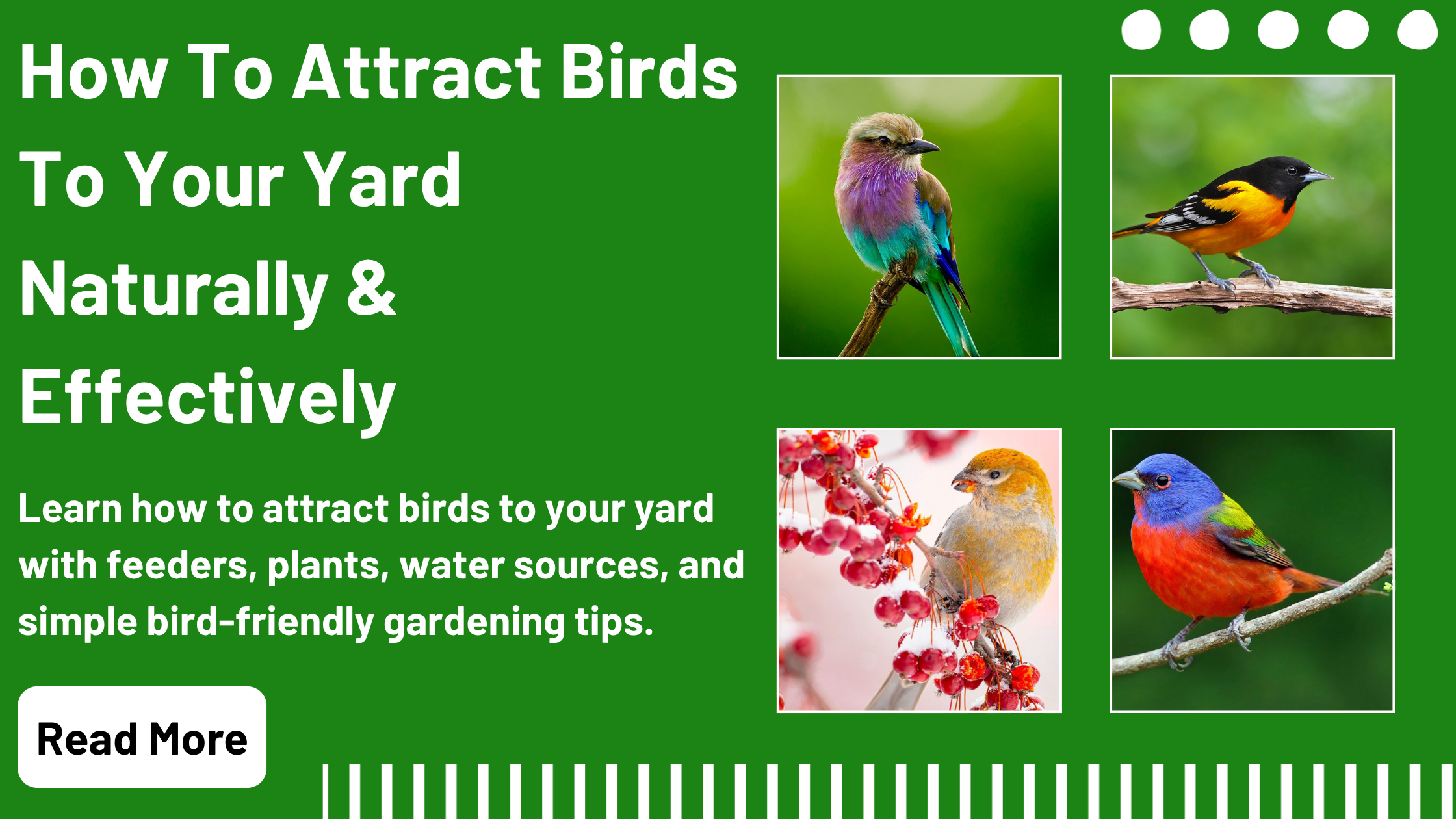
Birds add beauty, color and life to any outdoor area. They make a soothing atmosphere while numerous birds control insect levels and assist with the natural balance. Making a backyard or small garden into a bird habitat can be easier than you think, and can be applied to any size property. Birds are most attracted to the areas where they can find food, water, shelter, and safe nesting sites. You can attract various bird species to your yard by providing the proper attractants at the correct times. Here are a few suggestions that you’ll discover in this guide that will help you in how to attract birds to you naturally and make them feel welcome again.
Provide A Variety Of Bird Feeders
Bird feeders are one of the easiest methods of attracting birds. Variety is important in feeders and seeds as various kinds are preferred by different birds.
Select the most suitable feeders available.
Finches and chickadees love tube feeders and cardinals and sparrows love hopper feeders. Woodpeckers and nuthatches like to use suet feeders. Hummingbirds are best attracted to nectar feeders.
Use High-Quality Bird Food
Birds are attracted to fresh and nutritious food sources. Popular seed base options include black oil sunflower seed, peanuts, berries, suet and nyjer seed.
Keep Feeders Clean
Dirty feeders can cause diseases in birds. Empty / clean feeders frequently and remove any spoiled feedings to keep the feed area healthy.
It’s important to remain patient while birds get used to the new feeder.
Point Out Fresh Water Sources
Birds need water for drinking, walking and swimming, and they will bath and use it for cooling off on hot days.
Install a Bird Bath
Many species of birds can be attracted to a shallow bird bath. Set in a safe location that can be easily seen by falconry.
Use Moving Water
From the moment a bird sees a flow of water it is drawn to it as it is more visible and is kept cleaner. Small fountains, small drippers or a solar-powered water feature are suitable.
Refresh Water Daily
Always have clean water and regularly refill bird baths in cases of hot weather.
Bird activity in your yard will really come in rapid stream once fresh water sources are available.
Promote the growing of nativally adapted and native trees and flowers.
Birds are most likely to be drawn to natural habitats by native plants that offer food, shelter and nesting areas.
Grow Native Plants
Native plants provide insects, berries and seeds for the birds to eat. They also provide protection support to the local ecosystem.
Add Flowering Plants
Hummingbirds are attracted to bright, nectar-producing tubular flowers such as bee balm, salvia and cardinal flower.
Include Fruit-Bearing Trees
SSs such as berry producing shrubs and fruit trees offer natural food to birds at various times of the year.
Fostering diversity through layering with plants (trees, shrubs and flowers) also provides friendlier habitat for birds.
Make safe nesting & shelter rooms
Attach the bird netting to a protective area so that birds can feel that they are safe from all dangers and inclement weather.
Install Birdhouses
Provide birds with nesting boxes or birdhouses to attract and encourage them to return to and nest in your yard. Various bird species need varying sized and location of entrance holes. Nest boxes are also used by bluebirds, wrens, and chickadees. Continue to care for trees and shrubs. There are scant trees and shrubs and abundant evergreens for birds to find relief and hiding places.
Leave Natural Materials
Birds will find it easier to build nests with twigs, leaves, dried grass and small sticks.
Birds will reappear frequently and stay in your yard longer when you provide safe shelter.
Refrain From Using Pesticides And Chemicals
Insects are an important food source for birds, particularly during the nesting period. Insecticides with adverse effects can be used, but will decrease numbers of insects and have negative impacts on birds.
Use natural gardening techniques.
Using organic practices will help establish a healthier habitat for birds and pollinators.
Support Insect Life
Your garden will get some unmanaged bugs, but it will be great to give birds a much-needed protein source.
Generally, a healthy garden has more wildlife and a greater variety of bird species.
Feeders Should Be Installed In Safe Locations.
The placement of feeders is an important aspect for bird attraction.
Place Feeders Close To The Shelter
Feeders placed close to a tree or bush will be chosen by birds; they find these areas convenient since they have an easy way to get away from predators.
Avoid High-Traffic Areas
Set out feeder stations in areas of your yard where birds feel safe from predators, in a relatively quiet and unobtrusive location.
Prevent Predators From Attacking Birds
Do not let outdoor cats into feeders; if needed use squirrel-proof feeders.
Bird feathers are spaced out at feeding station, promoting more regular return visits.
Locate Specific Bird Species By Location
Each species is attracted to a particular type and amount of food and cover.
Hummingbirds
Plant nectar feeders and bright tubular salvia and bee balm flowers.
Woodpeckers
Provide suet feeders and keep mature trees, if possible.
Finches
Finches will be drawn by Nyjer seed and sunflower seeds.Nyjer seed and sunflower seed will attract finches.
Bluebirds
Provide food in the form of mealworms and place nesting boxes in areas that are open.
The more that you match the habitat to the bird species, the greater your chances of successfully attracting these birds.
Be Patient And Consistent
Don’t expect birds to show up right away after installing feeders or bird baths. It may take some time for them to find new food and cover.
Keep A Job Routine
Frequent and clean feeds and water so birds come to associate your yard as consistent food.
Observe Seasonal Changes
Visitors will vary depending on the season, due to different bird visits.
Make Your Own Long-Term Habitat
As plants grow and birds become familiar with the yard as a safe place, it will become more beautiful over time.
One of the most important elements of creating a bird Friendly environment is consistency.
FAQs
The most popular foods for attracting birds.
Black oil sunflower seeds, suet, peanuts, berries and nyjer seeds will attract many different kinds of birds.
How much time do you estimate it takes for birds to locate the new feeder?
It may take several days or even weeks for birds to detect and accept a new feeder.
3. What plants will hummingbirds visit?
Hummers love brightly colored tubular flowers such as bee balm, salvia, fuchsia and cardinal flower.
Why don’t birds visit my yard?
Birds can be discouraged if there is inadequate shelter, improper feeder placement, predator or fluctuating food supply.
5. Is it essential to have bird baths for attracting birds?
Absolutely, clean water sources are extremely crucial for the needs of birds as they need both for drinking and bathing.
Conclusion
One of the best practices you can do to attract birds & enjoy and promote local wildlife is to set up a bird-friendly yard! You can attract a variety of birds year round by offering food, fresh water, shelter and native plants. Adding feeders, flowers, and the bird bath, for example, is one of the significant alterations that can make a huge difference. Birds not only introduce beauty and serenity to an outside environment, but they are also healthy to your garden ecosystem. Patience and consistency is important – birds will frequent other places where they feel safe and welcomed. Take small steps to begin; soon you will have your yard a haven for beautiful birds.