



Depending on the circumstances, the decision to leave a job can impact not only your career but your reputation as well. You may be moving to a different job, seeking a promotion, or just looking to break away from a job because you want to pursue something more fulfilling, or to try to find a better balance between work and your personal life. It’s important to resign professionally, but how to quit a job? A well-thought-out resignation helps keep the positive relationship with your employer and colleagues. As many people are apprehensive of giving up their habit, they are not sure of the right things to do. But, if you play your cards right, you can say goodbye to your role without feeling ashamed. In this guide, you will find out how to leave a job gracefully.
Be Sure To Be Prepared To Quit!
Do not rush into a resignation but consider it well before making the decision. A job change without proper planning can bring about financial or career stress. Take the time to identify why you are leaving. Identify your reasons for leave and understand them. Consider your reasons for quitting. Factors which can be common are career expansion, salary rise, the negative work environment, dissatisfaction with the job or relocation. It’s helpful to know what you are doing the move for so you can choose the right way.
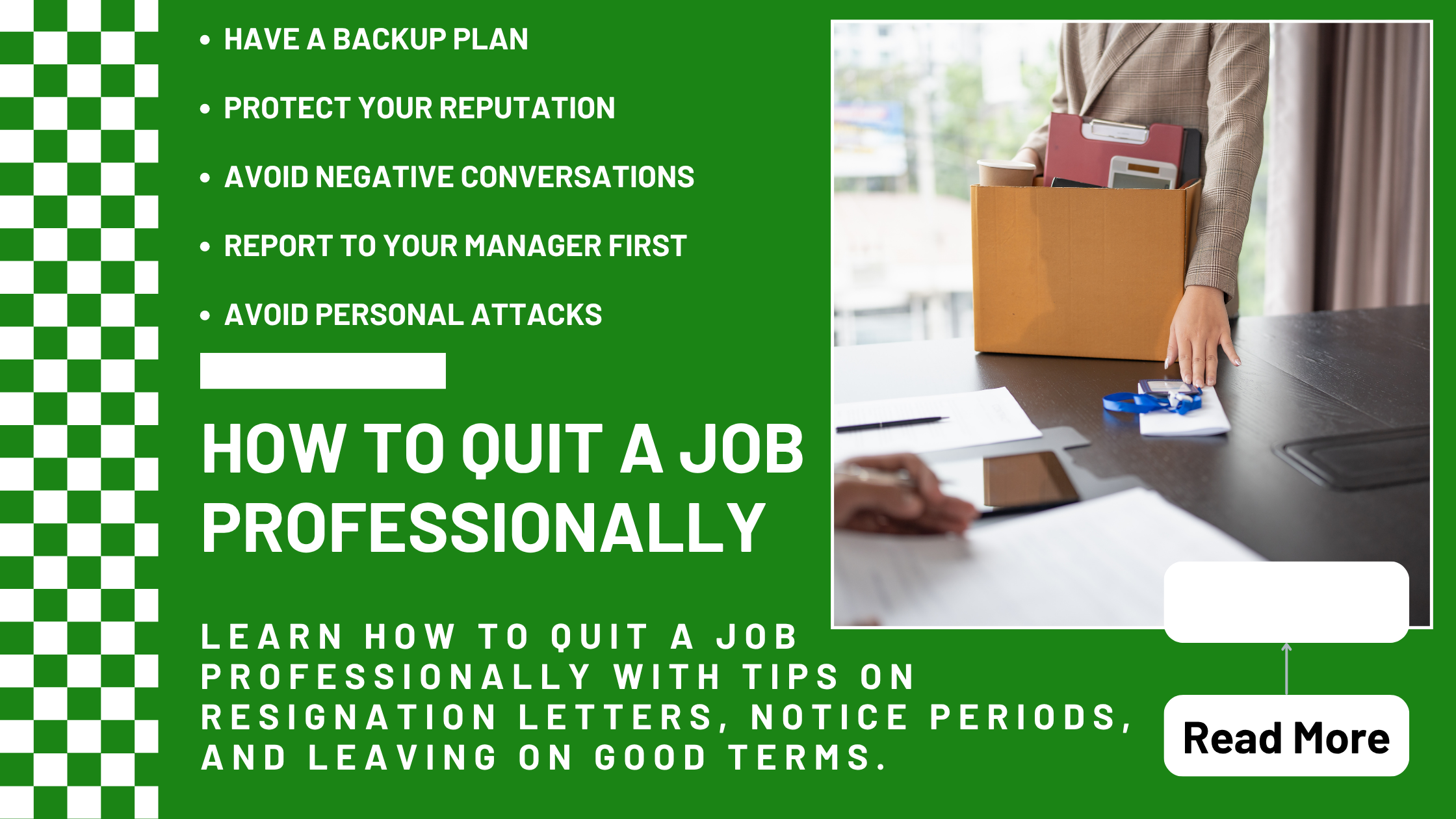
Have a Backup Plan
Wherever practicable get another position before you resign. A stable of finances can help ease some of the stress of the transition period. Many career planners and professionals suggest that you save money or have a new offer waiting before you quit.
Carefully Read Through Your Employment Contract
Verify vacation and pay-out terms, unused vacation policies, non-competes, and other details as outlined in the contract or company policy.
Career Transition Smoothsaoning is ensured by making proper preparations prior to resignation.
Choose the Right Time to Resign
When it comes to how to leave the job professionally were are not to the extent of the timing.
Try to avoid leaving in critical projects.
If possible, don’t quit when the business is doing major projects or large deadlines are coming up. A bad break in the working effort relationship may occur if departing at an unsettling time.
Take a moment to think about Your Benefits and Bonuses.
Some staff members cross their fingers and give up their job before the bonuses/commissions/benefits are paid. This can help ensure financial stability as you transition into your new home.
Give Proper Notice
Two weeks’ notice is the norm in many businesses. Longer notice may be required for Senior positions.
It is important to think about when to resign so that a positive reputation is maintained.
Report to your Manager First.
You should let your manager know about your resignation directly — not via your colleagues or office gossip.
We can schedule a meeting on a private basis.We can arrange a private meeting.
Have a professional meeting with one another, your supervisor, and discuss your resignation respectfully one by one.
Don’t Panic Or Act In A Silly Way & Don’t Get Upset Or Go Crazy Around
If you are displeased with the company, don’t have an emotional reaction or negative comments. Maintain a professional and business-like tone and strictly keep the discussion on the job.
Be ready to answer questions!Be ready to answer questions!
Your manager might ask you why you’re leaving or what your plans are for the future. You don’t need to share all the information. It is quite often sufficient to provide a basic explanation.
Resignation is handled professionally, which maintains a rapport and references.
Write A Professional Resignation Letter
A resignation letter should be considered to be brief, straightforward and polite. It is an official record of your departure from the company.
What to Include in a Resignation Letter
Your resignation letter should contain details such as:
Your desire to leave the organization.Your declaration of resignation.
The last day of work will be determined by your final working day.
Praise for being given the chance
A closing statement by a professional.
Keep It Brief
Don’t leave a negative comment or long explanation. It’s best to write simple and professional resignation notices.
Simple Resignation Statement Example
This letter is to serve as formal resignation from the company and thank you in advance for the opportunities and experiences you spent at my company.
Writing a resignation letter in a respectful way will ensure that it leaves a positive last impression.
This could involve staying professional throughout the notice period.
How you behave in the last days on the job is as important as how you perform in your time at the company.
Complete Outstanding Work
Complete important tasks/projects when possible. This demonstrates your responsibility and professionalism.
Assist With the Transition
Provide training to replacements, organizing files, or documenting processes of a team and what they are doing following your departure.
Avoid Negative Conversations
Avoid criticizing the company, the management, or co-workers on notice. You are being professional, therefore you are not harming your reputation.
Your actions in the last few weeks can affect how you are perceived in your profession.
Conduct an “Exit Interview” Professionally
Some firms are running exit interviews to find out the feedback from the employees.
Be honest but respectful to others:
Offer constructive criticism without going too far out of proportion with negativity and emotion.
Focus on Solutions
When talking about problems at work, be professional and offer solutions.
Avoid Personal Attacks
It’s important not to be critical of certain colleagues or bosses, or they might tarnish your image in the workplace.
Using an exit interview can be a positive way to create a good parting between a staff member and the school.
Maintain Professional Communication Among Staff & Keep Employees In Touch
Keeping connections with employers after you’ve left the position can help you advance your career.
Connect on LinkedIn
Connecting with old colleagues and bosses may open up new possibilities.
Send a Goodbye Card
Thank-you letter notes: make it short and to the point, thereby conveying a sense of gratitude and professionalism.
Protect Your Reputation
Industry is not as big as you think, and networking with professionals can be very beneficial down the road.
If you exit professionally on a good note, it can help build your professional network.
The entries in this book are organized into four sections.The entries in this book are organised in four sections:
Unwanted resignations can tarnish a staff member’s reputation.
Quitting Without Notice
Suddenly leaving without a warning could have a detrimental impact on future reference, and work relationships.
Avoiding any disparaging remarks about the company.
Talking about your boss openly on the job can impact your reputation.
Ignoring Your Responsibilities
Not working at all through the notice period creates a bad impression.
Posting About Your Resignation Online
Don’t post your resignation on social media with all the emotional and the negative things that you’re feeling.
When you resign, professionalism helps you to secure long-term career enhancements.
Video Guide on Quitting Professionally
FAQs
2. What is the notice period of resignation for a job?
In most cases employees will give at least two weeks’ notice, but there can be an exception for some jobs.
2. Should i leave my job until I get a different job?
Typically it is better to find another position or to have savings available before resigning.
4. How do I tell someone that I want to leave my job?
Use a gentle, yet direct, and professional approach. Talk about the fact that you are looking elsewhere or another career.
4. Does workplace separation impact on my employment prospects?
Now, leaving professionally does indeed help to maintain references, networking and professionalism.
When giving your notice, what should you give up?
Do not make negative comments, have emotional reactions, leave at a last minute or act unprofessionally in your notice.
Conclusion
Learn How to Quit a Job. Resigning from a job professionally is an integral aspect of career development and personal development. The successful execution of this process can leave you in good terms of exit based on careful planning, appropriate communication and professional behavior. Providing good notice, drafting a respectful resignation letter, and aiding transition can make a big difference. The future of the business is valuable, and professional resignations will help you to maintain a positive reputation within the workplace. Dealing with a problem work place with effective maturity is a credit to your character whether you are leaving or not. If not now, then perhaps in the future, a tidy day, a good opportunity will appear!